7 Common Machine Guarding Mistakes That Can Affect Safety & Production Efficiency
A Practical Guide for Machine Manufacturers, Industrial Automation Companies & Production Facilities
In modern manufacturing, machine guarding plays an important role in protecting operators, controlling access to hazardous areas and supporting efficient production processes.
Whether it's an automated assembly line, conveyor system, packaging machine or robotic workstation, a well-designed industrial machine guarding system should balance protection, accessibility and practical maintenance requirements.
However, several common design mistakes can reduce the effectiveness of machine safety fencing and create unnecessary operational challenges.
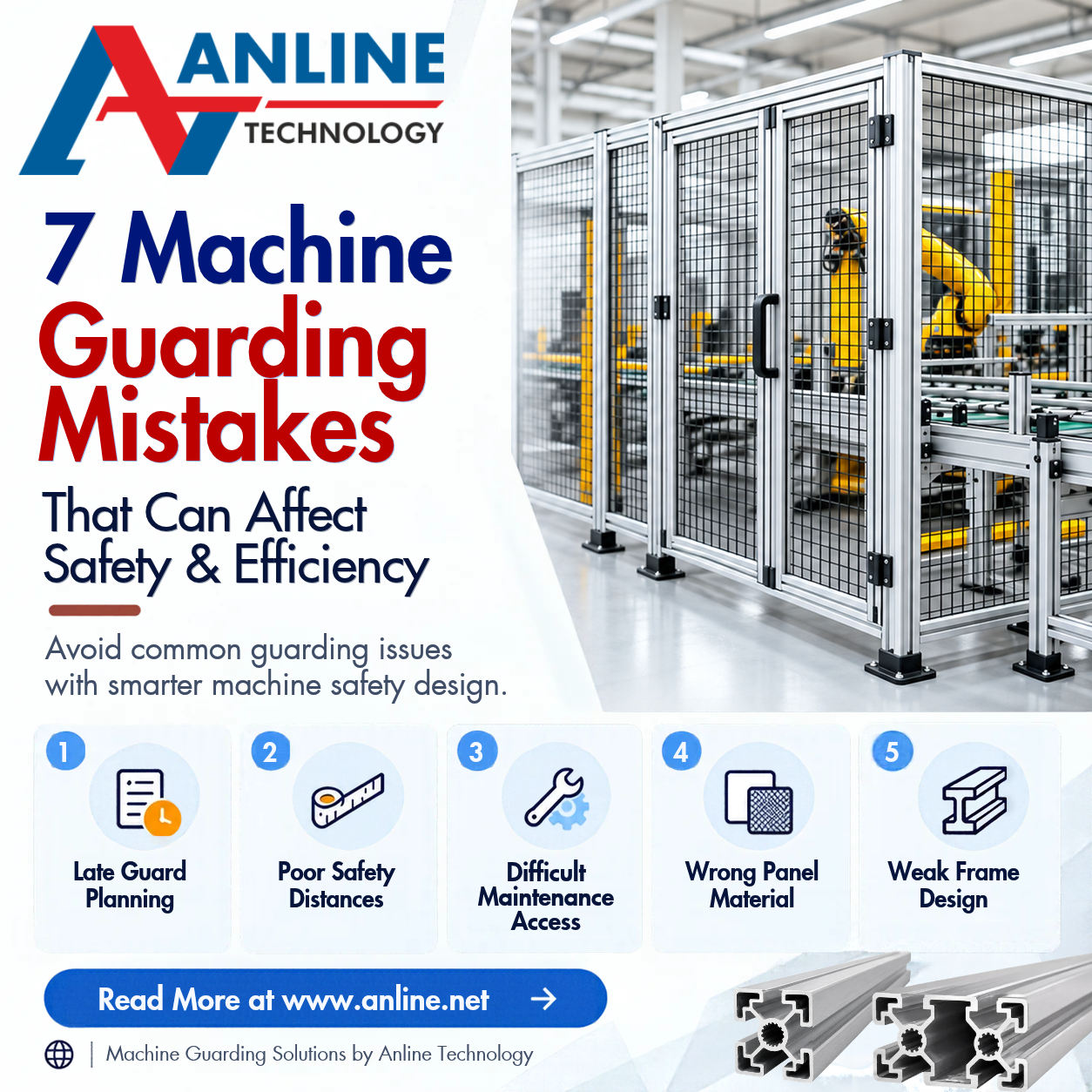
Here are seven important factors to consider when planning a machine guarding system.
1. Planning Machine Guarding Too Late
One of the most common mistakes is treating machine guarding as an addition after the machine has already been designed or installed.
This can result in restricted access, unsuitable panel dimensions and difficulty accommodating maintenance requirements.
Better approach: Consider the guarding layout during the initial machine design stage. Identify hazardous zones, available floor space, material movement and operator access requirements before finalizing the enclosure.
2. Overlooking Safety Distances and Reach Protection
Installing a protective fence does not automatically make a machine safe.
Mesh openings, guard height, distance from moving components and access beneath or around panels must all be considered.
Better approach: Determine appropriate guard dimensions and safety distances through a machine-specific risk assessment and applicable machinery safety standards.
3. Ignoring Maintenance and Operator Accessibility
Machine operators and maintenance teams may need regular access for cleaning, inspection, adjustments or component replacement.
Poorly positioned guards can make these activities unnecessarily difficult.
Better approach: Plan suitable access doors, removable panels and maintenance clearances. Where necessary, incorporate appropriately designed safety interlocking arrangements that prevent hazardous machine operation during access.
4. Selecting the Wrong Guarding Panel Material
Different applications require different types of protective panels.
Wire mesh panels can provide visibility and ventilation where suitable, while transparent or solid panels may be appropriate when containment of particular hazards is required.
Better approach: Select panel materials based on the actual machine hazards, environmental conditions, required visibility and impact resistance.
5. Neglecting Frame Strength and Stability
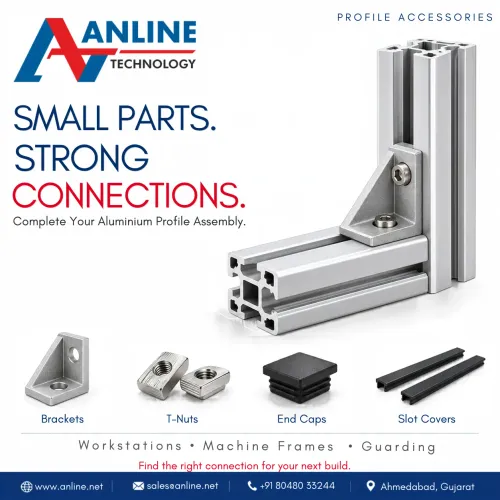
The aluminium profiles, brackets, connectors and mounting arrangements used in a guarding structure influence its overall rigidity and durability.
Inadequate support or poorly selected components may lead to unwanted movement, misalignment or premature wear.
Better approach: Choose a properly engineered frame configuration based on guarding height, panel size, loading conditions and installation requirements.
6. Not Considering Future Machine Modifications
Production facilities frequently upgrade their machinery, modify conveyors or change existing production layouts.
Guarding systems that are difficult to modify may increase the effort required for such changes.
Better approach: Consider modular guarding systems constructed using T-slot aluminium profiles and compatible accessories, allowing practical reconfiguration while ensuring every modification undergoes an appropriate safety review.
7. Overlooking Inspection and Long-Term Maintenance
Even a correctly designed guarding system needs regular inspection.
Loose fasteners, damaged panels, altered access points or malfunctioning interlocks can compromise its effectiveness over time.
Better approach: Establish periodic inspections, provide operator training and ensure maintenance activities follow appropriate machinery isolation and safety procedures.
Why Consider Aluminium Profile Machine Guarding?
Modular aluminium profile systems offer several practical benefits for industrial machine builders:
- Flexible configurations: Suitable for different machine layouts and enclosure dimensions.
- Modular construction: Components can be assembled and reconfigured for evolving production requirements.
- Professional appearance: Clean, organized structures for modern industrial installations.
- Accessory compatibility: Brackets, connectors and other mounting components support customized assembly.
- Maintenance-friendly design: Appropriately planned access panels and modular components can simplify servicing.
The suitability of any guarding system ultimately depends on its complete design, hazard assessment and installation—not the framing material alone.
Machine Guarding Solutions from Anline Technology
At Anline Technology, we understand the importance of practical, reliable industrial components for modern machine-building applications.
We offer solutions and components for:
- Industrial Machine Guarding & Safety Fencing
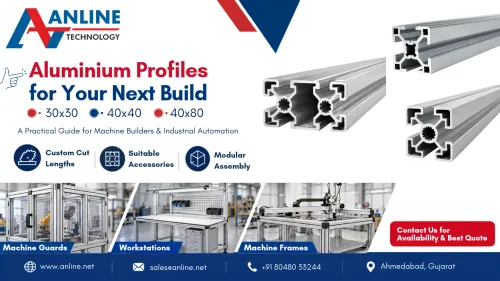
- T-Slot Aluminium Profiles & Accessories
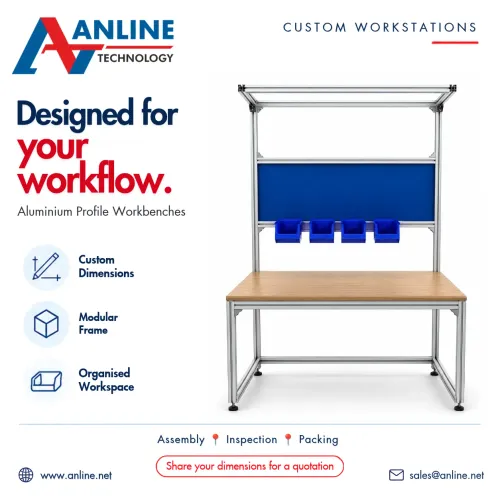
- Industrial Workstations & Machine Frames
- Conveyor Structures
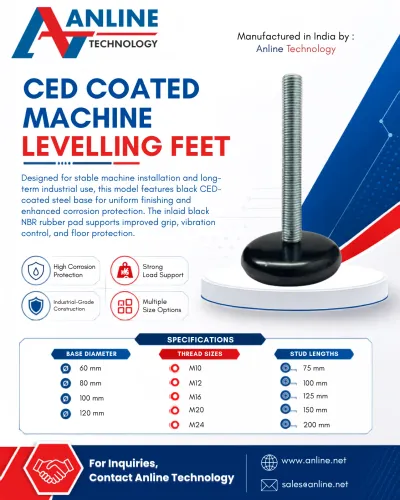
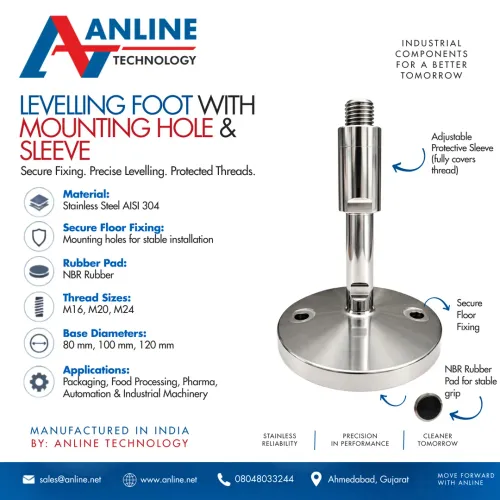
- Levelling Feet & Machine Support Components
With a focus on the industrial requirements of Ahmedabad, Gujarat and customers across India, we support machine manufacturers, industrial automation companies and production facilities with suitable component solutions.
Looking for Machine Guarding Components for Your Next Project?
Whether you're developing a new machine enclosure, upgrading an existing production line or planning a modular industrial structure, Anline Technology can help you identify suitable aluminium profiles and industrial components.
Get in touch with Anline Technology to discuss your requirements.
Website: www.anline.net
Anline Technology – Industrial Components & Modular Engineering Solutions.
Keywords